IBM Z Systems for AI, Security, Resiliency, and Enterprise Workloads
IBM z17: AI-Driven Performance for the Next Generation of Enterprise Computing
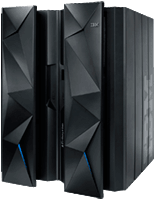
The IBM z17 multi-frame system became generally available on June 18, 2025. Powered by the 5.5 GHz Telum II processor, the z17 brings AI acceleration closer to enterprise data and transactions to support use cases such as real-time inferencing, fraud detection, and analytics.
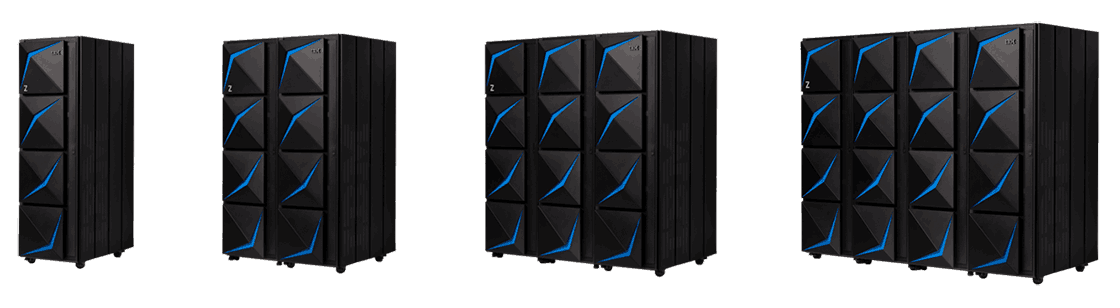
The multi-frame z17 Model ME1 is available in one- to four-frame configurations, with up to 208 engines and up to 64 TB of memory. IBM reports up to 450 billion AI inference operations per day with a 1-millisecond response time in a published benchmark; actual results vary by workload and configuration.
The z17 also includes AI-powered security capabilities and support for NIST-standardized quantum-safe cryptographic algorithms. These capabilities help organizations protect sensitive data and strengthen cyber resilience while modernizing mission-critical workloads.
IBM z17 Multi-Frame Specifications
- Model: IBM z17 ME1 (machine type 9175)
- Configuration: One to four frames
- Processor: 5.5 GHz Telum II
- Maximum: 208 engines and 64 TB of memory
- IBM data sheet: IBM z17 multi-frame data sheet
IBM Spyre Accelerator
The IBM Spyre Accelerator became generally available for IBM z17 and LinuxONE 5 systems on October 28, 2025. The PCIe accelerator complements the Telum II processor by adding AI compute capacity for workloads such as generative AI.
Read IBM’s Spyre Accelerator availability announcement.
IBM z17 Single-Frame and Rack-Mount Systems
IBM announced single-frame and rack-mount z17 configurations in July 2026. They became generally available on August 12, 2026, extending z17 deployment options for organizations with different data-center requirements.
- Single frame: IBM z17 ME2, packaged with IBM racks and intelligent power distribution units
- Rack mount: IBM z17 MER, designed for installation in a client-provided rack
- Both configurations: 4.8 GHz Telum II, up to 82 engines, and up to 18 TB of memory
- Available sizes: 6, 18, 39, and 82 engines
IBM z17 single-frame data sheet | IBM z17 rack-mount data sheet | IBM z17 product specifications
Read IBM’s announcement about the compact z17 systems.
IBM z16: AI-Enabled Mainframe Configurations
IBM introduced the z16 in 2022 with the Telum processor and an integrated on-chip AI accelerator designed to support low-latency inferencing, including real-time analytics and fraud detection. The z16 also introduced quantum-safe cryptography capabilities.
IBM z16-A02 and Rack-Mount Configurations
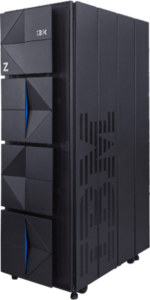
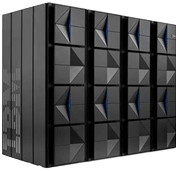
The z16 product family includes the A01 multi-frame system, the A02 single-frame system, and the AGZ rack-mount system. The single-frame and rack-mount configurations offer options for organizations seeking a smaller or more flexible data-center footprint.
The A01 multi-frame configuration supports up to 200 engines, a 5.2 GHz Telum processor, and up to 40 TB of memory. The A02 and AGZ configurations support up to 68 engines, a 4.6 GHz Telum processor, and up to 16 TB of memory.
Data sheet: IBM z16 data sheet
 |
 |
IBM z16 Specifications
- Model A01 specifications and current configuration information: IBM z16 product specifications
- Model A02 data sheet: IBM z16 Model A02
- Rack-mount specifications: IBM z16 product specifications

IBM z15: A Previous-Generation Mainframe
The IBM z15 family includes models 8561-T01 and 8562-T02. Depending on configuration, the system is available in one to four frames, with up to 190 configurable cores and up to 40 TB of RAIM memory.
At launch, the z15 expanded IBM’s Pervasive Encryption capabilities and introduced features such as IBM Data Privacy Passports, on-chip compression, and IBM System Recovery Boost. System Recovery Boost can use additional system capacity on an LPAR to help accelerate recovery after planned and unplanned events.
IBM z15 Operating System Compatibility
IBM’s current documentation lists z/OS 2.5, z/OS 3.1, and z/OS 3.2 for z15 systems. Earlier z/OS releases may be listed for specific models, but hardware compatibility does not mean that a release remains in standard IBM service. Check IBM’s z/OS server requirements for current model and release details.
IBM’s June 2026 lifecycle chart lists planned standard end-of-service dates of September 2026 for z/OS 2.5, September 2028 for z/OS 3.1, and September 2030 for z/OS 3.2. It lists planned extended defect support through September 2029, 2031, and 2033, respectively; IBM Software Support Services are required for that extended support. Planned dates and eligibility may change.
IBM z14: Security, Resiliency, and Earlier-Generation Systems
IBM z14 ZR1: Single-Frame Configuration
IBM introduced the single-frame z14 ZR1 and LinuxONE LR1 in 2018. The z14 ZR1 offered up to 30 available processor cores and up to 8 TB of memory in a 19-inch frame. It brought z14 capabilities to a smaller footprint and included the option to use available rack space for other equipment.

IBM z14: The Trust Economy’s Backbone
The IBM z14 introduced security, analytics, and connectivity capabilities for enterprise workloads. Its 19-inch system supported up to 32 TB of system memory and up to 16 TB per LPAR. IBM also redesigned the z14’s L1 and L2 cache architecture to provide more on-chip cache per core.
IBM’s compatibility documentation lists z/OS 2.5 and z/OS 3.1 for z14 systems. The current z/OS 3.2 server list begins with z15, so z/OS 3.2 is not listed as supported on z14. Check IBM’s model-specific requirements and lifecycle information before planning an upgrade.

IBM marks the z14 and z14 ZR1 as withdrawn from marketing. Support, microcode, and upgrade eligibility depend on the specific model; consult IBM’s product lifecycle information for current details.
IBM z13: Legacy IBM Z System
The correct product name is IBM z13. The zEnterprise EC12 was an earlier generation; “zEnterprise EC13” is not the product name for the z13.
IBM’s lifecycle chart lists z/OS 2.5 for z13 systems. IBM lists z/OS 3.1 as requiring z14 or later, so it is not compatible with z13. Releases before z/OS 2.5 are beyond standard service; confirm any extended-support eligibility with IBM.
Certified refurbished IBM z13 systems may be available through PSR. Contact PSR to confirm current availability and support options.
Frequently Asked Questions About IBM Z Systems
Can older IBM Z systems still support modern enterprise workloads?
Older IBM Z systems can continue supporting critical workloads, but aging hardware may create limitations around support, compatibility, performance, security, and modernization. A planned upgrade path helps reduce risk while preserving the value of existing mainframe investments.
When should an organization upgrade its IBM Z system?
An organization should evaluate an IBM Z upgrade when hardware support is ending, performance or capacity needs are increasing, security requirements are changing, or the business wants to take advantage of newer AI, resiliency, and modernization capabilities.
What is the difference between IBM z17, z16, z15, and z14?
Each IBM Z generation adds improvements in processing power, memory, security, resiliency, and workload support. Newer systems such as z17 and z16 place more emphasis on AI acceleration, real-time analytics, quantum-safe security, and modern enterprise infrastructure needs.
What are IBM Z systems used for?
IBM Z systems are used to run mission-critical enterprise workloads such as high-volume transactions, core business applications, analytics, fraud detection, and secure data processing for organizations that need strong performance, reliability, and resilience.